Cascading Crisis in Metallurgy Threatens Public Finances and Municipal Budgets
Production cuts in Ukraine's steel sector trigger tax shortfalls and job losses, creating a ripple effect across the entire national economy.
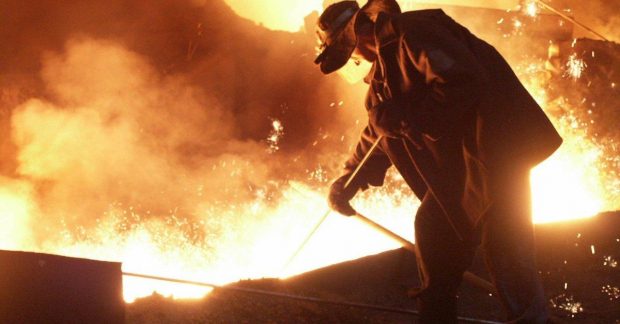 💼Economy
Photo: UNIAN
Key points
- Steel production drops in 2026 due to shelling and logistics hurdles
- Significant decline in tax revenues from major metallurgical companies
- Ripple effect impacting energy, railways, and small enterprises
- Municipal budget sequestration and freezing of local development projects
The crisis in Ukraine's metallurgy industry has evolved from a sector-specific issue into a systemic threat to both national and local public finances. Declining production volumes inevitably lead to reduced tax revenues, job losses, and fewer orders for related economic sectors, according to GMK Center analysts.
Drivers of the Decline in 2026
While mining and metals enterprises contributed about $900 million in taxes and fees to budgets in 2025, the situation deteriorated significantly by 2026. Experts attribute the negative trend to ongoing shelling, maritime port blockades, EU market restrictions, expensive logistics, and severe electricity shortages. Specifically, during the first nine months of the year, Metinvest cut its tax payments by 6% to UAH 13 billion, while VAT inflows plummeted by 36%.
Similar downward trends are visible at other major facilities. The Dniprovsky Metallurgical Plant reduced its tax contributions by 46% to UAH 129 million. ArcelorMittal Kryvyi Rih, despite initial growth early in the year, also anticipates lower payments following production halts in late September.
Wider Economic and Regional Impact
"We have reached a critical point. Steelmakers are losing the ability to produce and export steel, and the country risks losing jobs and billions of hryvnias in taxes," says Metinvest CEO Yuriy Ryzhenkov.
This problem exhibits a clear cascading character, as the metals sector historically accounts for a substantial share of GDP, foreign exchange earnings, and tens of thousands of jobs. Plant slowdowns severely impact energy providers, railways, machinery manufacturing, and small businesses. In industrial cities, declining revenues from personal income taxes and land levies are already forcing local authorities to sequester municipal budgets and freeze development projects.
Source UNIAN — unian.ua/society/kaskadniy-efekt-padinnya-virobnictva-u-metalurgiji… ↗
Read next
 🩺Health
Beyond Salmon: The Affordable Fish That Wins the Omega-3 Race
Experts explain why Atlantic mackerel outperforms salmon in omega-3 content and share the healthiest cooking methods.
 🧠AI Analysis
Trial for Park Murder: High-Profile Case Sent to Court in Odesa
Odesa law enforcement completed the investigation into a brutal attack in Preobrazhensky Park that left a man dead. The accused will soon face trial.
 🛡️Security
Ukrainian Defense Forces Hit Russian Corvette 'Merkuriy' in the Mediterranean Sea
Ukrainian defenders, in cooperation with the Security Service, conducted an operation near the Libyan port of Benghazi, destroying a Russian warship.
 🛡️Security
Massive Strike on Lozova Injures 12, Damages Dozens of Residential Buildings
As a result of a large-scale hostile attack on the city of Lozova in the Kharkiv region, 12 people were injured, and infrastructure and housing were damaged.
 🧠AI Analysis
Scandal Surrounding SAP Head's Inner Circle: Allegations and Questions for Anti-Corruption Agencies
Former Prosecutor General Ruslan Kravchenko stated that the wife of SAP Head Oleksandr Klymenko is trying to avoid corruption liability through statements about a bribery…
 🧠AI Analysis
Evacuation vehicle struck in Kramatorsk: Two killed
Russian forces attacked a marked evacuation car in Kramatorsk, resulting in the deaths of two local residents and injuring two others.